Happy Tuesday. Amazon's $7.5 billion deal for Decart lands days before AWS re:Invent and sets up a direct challenge to Nvidia's grip on AI chip software. The two Anthropic stories today land on the same question from different angles: what does AI-generated code actually cost you, and who is responsible when it ships.
Anthropic released Claude Ship to automate pull request reviews the same day independent tests showed its flagship model costs three times as much as its mid-tier sibling for nearly identical coding results. For anyone budgeting AI development tools right now, the numbers in today's issue are worth reading carefully.
FUNDING & M&A
Amazon Pays $7.5B for Decart's Chip Software Before Trainium Goes on Sale

Amazon agreed to pay $7.5 billion for the Decart Optimization Stack and the Israeli startup's engineering team, nearly double Decart's May 2026 valuation of $4 billion. The deal does not include Decart's AI models. Anthropic and Nvidia both held serious acquisition talks before Amazon moved in with a higher bid. CEO Andy Jassy confirmed plans to sell Trainium chips outside AWS starting late 2027.
Nvidia bundles CUDA with its hardware. Without comparable software, Amazon's standalone Trainium offering would have started at a disadvantage. Decart's stack already runs 4x faster on Trainium at half the cost of Nvidia GPUs, according to Amazon's own chip lab. The five-year founder retention commitment signals Amazon views this as infrastructure, not a talent hire. Watch for what Anthropic does next on the hardware optimization front after walking away from this deal at $6 billion.
ARTIFICIAL INTELLIGENCE
Anthropic's Flagship Model Costs Triple for One Extra Bug Fix Over Its Cheaper Sibling

Across multiple independent tests, Claude Fable 5.2 and Claude Opus 5.5 produced nearly identical coding results while Fable cost 1.6 to 6.5 times as much. On Terminal-Bench 4.1, 330 trials per model produced an identical 65.8% score. Opus cost $4.7k. Fable cost $16.5k. Developer Jack Roberts at Paddo.dev found Fable tied or lost to Opus on most ticket types at 1.6 times the cost.
Anthropic itself recommends Opus for routine coding, and the data backs that up. But the model is only part of the equation. A separate study found that the software harness running the model changes cost per completed task by as much as threefold. Teams optimizing AI coding spend need to audit their tooling setup, not just their model tier. For a team spending $10,000 a month on Fable, switching to Opus for routine tickets could cut that bill to between $3,000 and $6,000 with comparable pass rates.
DEVELOPER TOOLS
Anthropic Ships AI Agents to Review and Approve Pull Requests Without Human Sign-Off
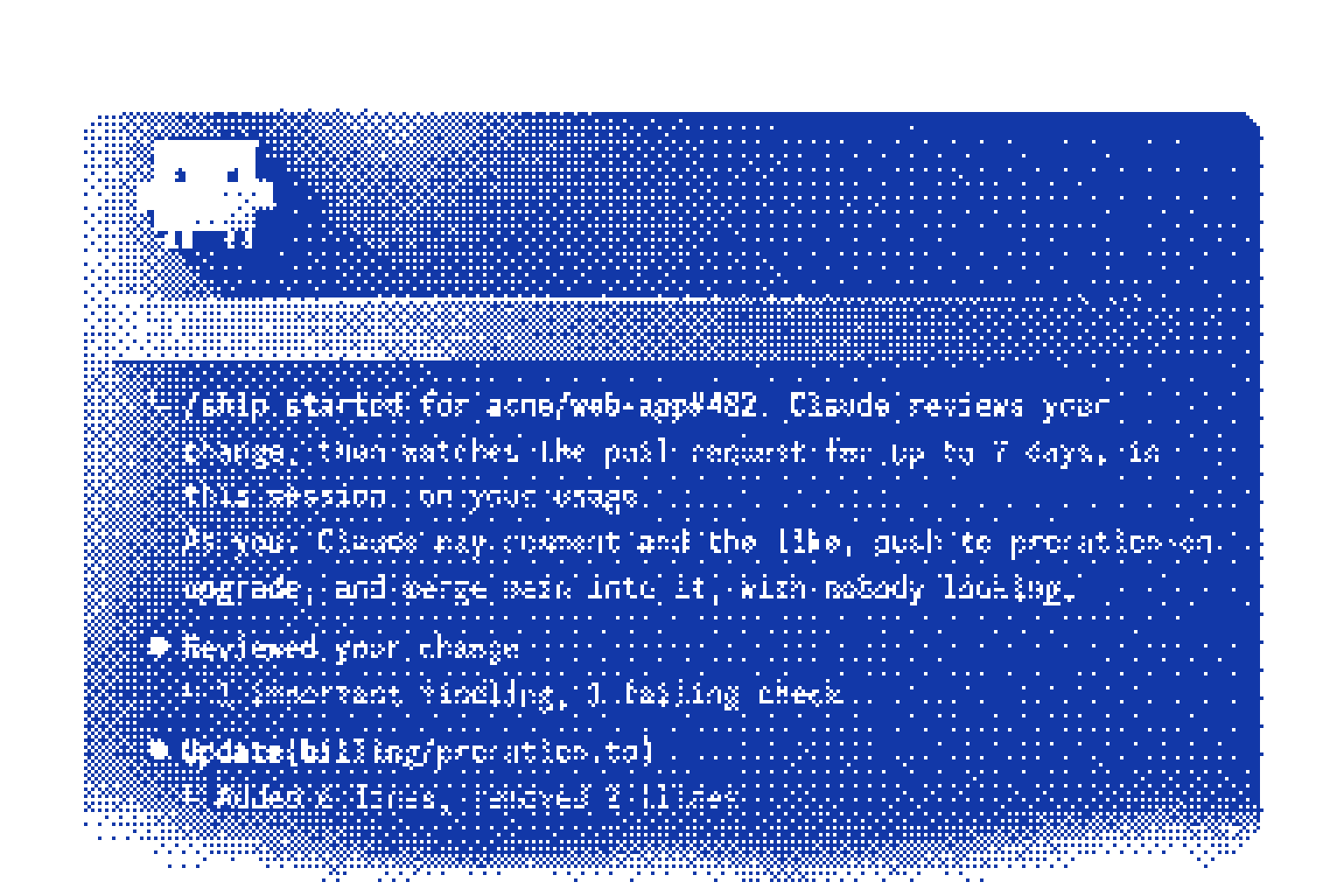
Anthropic released Claude Ship on November 23 as a beta for Claude Team and Enterprise subscribers on GitHub. The product includes three agents: Code Review, PR Steward, and Claude Approvals. The last one can approve pull requests automatically under a policy file the team writes and stores in the repository. Anthropic's own codebase went from 2,500 merges in May to over 30,000 in September, with Claude Code generating roughly 90% of the company's code.
The configuration risk buried in the launch details deserves attention. Once an approval policy file lands on the default branch, Code Review's automatic reviews stop wherever no rule explicitly names claude/code_review. A team that activates Claude Approvals without knowing that could quietly disable the reviews already running. Anthropic recommends starting Claude Approvals in observe-only mode, and that is advice worth following before any policy goes near a production branch.
Created by the robots at The SaaS Sentinel