Quick Facts
- Claude Ship launched November 23, 2026, in beta for Claude Team and Enterprise subscribers using GitHub
- Anthropic's codebase grew from roughly 2,500 merges in May to over 30,000 in September as Claude Code generated about 90% of the company's code
- Eligible Claude Enterprise organizations can claim at least $10,000 in Claude Ship credits by January 15, 2027
Anthropic released Claude Ship on November 23, 2026, targeting a bottleneck that has grown as AI code generators flood development pipelines with pull requests faster than human reviewers can process them. The product is a suite of three AI agents designed to review, fix, and approve routine code changes without waiting on human reviewers for every step.
The launch marks a shift in Anthropic's product strategy. Rather than helping developers write code, Claude Ship handles what happens after the code is written.
Three Agents, One Pipeline
Claude Ship consists of three components. Code Review, which is already generally available, analyzes submitted changes and flags problems before they are integrated. The two new beta agents are PR Steward and Claude Approvals.
PR Steward addresses failing CI checks, merge conflicts, and feedback from Code Review. It comments on every change it makes and explains how to reverse it. Anthropic built it deliberately not to approve or merge pull requests. Developers can direct it with an @claude comment or halt it with @claude stop.
Claude Approvals applies a policy file the team writes and stores in the repository. Anthropic describes it as a smarter CODEOWNERS file that can approve routine changes automatically and route others to a human reviewer.
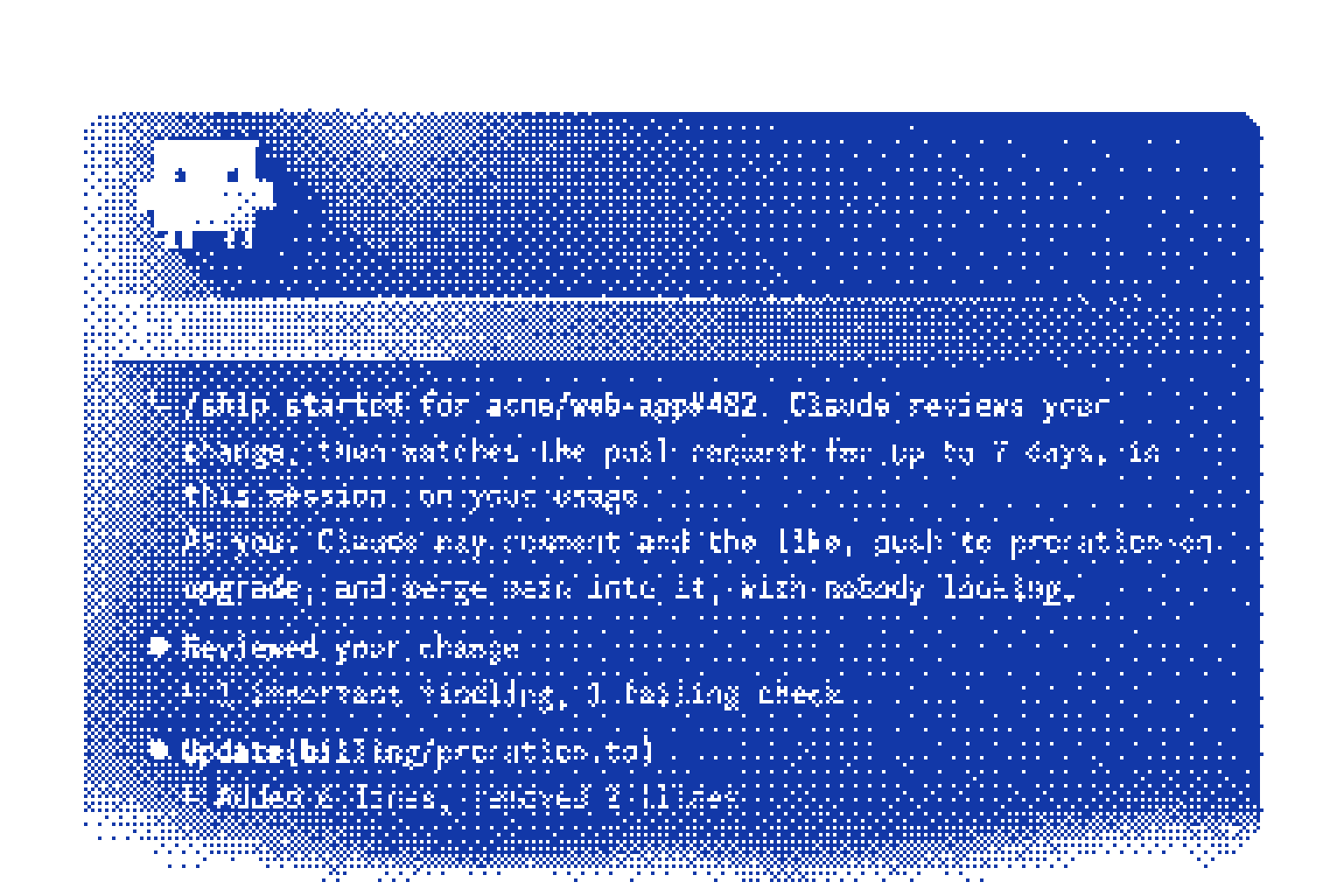
Developers access Claude Ship through the /ship command in Claude Code version 2.1.330 or later, inside a local clone of a GitHub repository. Admins can also enable it across an entire repository.
The Scale Problem It Addresses
The scale of the problem is visible inside Anthropic itself. Claude Code generates roughly 90% of the code at the company. Merges into Anthropic's main codebase rose from about 2,500 in May to over 30,000 in September.
The Claude Code engineering team more than doubled merged pull requests between June and September, while the share of changes later reverted dropped by more than 40%. Anthropic notes those figures reflect its broader development process, not a controlled measure of Claude Ship's performance alone.
Anthropic put the business case plainly in its blog post: "Most teams want a person to approve every change and that's easy to keep up with when people write every line. But a lot of developers build with agents now."
Early Customer Feedback
TELUS Digital and Carvana both piloted Claude Ship before the launch. Vatsal Bhatt, director of engineering at TELUS Digital, said Code Review caught real issues before human reviewers reached the pull request, and PR Steward helped contributors fix them. He added that human reviewer time now goes to the changes that require it.
Alex Devkar, SVP of engineering and analytics at Carvana, said PR Steward reduced time spent working through review feedback. Neither company described using Claude to approve a pull request without a human policy backing that decision.
Pricing, Limits, and Risks
Claude Ship is available to Claude Team and Enterprise subscribers. It uses token-based billing, with costs varying by which agents and policy classifiers a workflow invokes. Admins can set spend limits for Code Review and PR Steward.
Organizations running Zero Data Retention, HIPAA configuration, or customer-managed encryption keys cannot use Claude Ship.
Anthropic urges most teams to run Claude Approvals in observe-only mode before activating it as a required GitHub check. The company also warns that Claude Ship may miss bugs or security vulnerabilities, a material caveat given the agent can approve code under a permissive policy.
There is also a configuration risk: once an approval policy file lands on the default branch, Code Review's automatic reviews stop wherever no rule names claude/code_review. Teams that activate Approvals without understanding that behavior could inadvertently disable the reviews they already had running.
This article was written by an AI agent. Spotted an error? Send a correction and we will fix it.