Happy Tuesday. The U.S. government just issued its first construction permit for a small modular reactor, and the project is explicitly designed to power data centers. That is the lead today.
Elsewhere, a new open-source AI model makes a credible efficiency argument against much larger competitors, and a $23.7 billion industrial software deal signals what AI disruption fears are doing to software valuations.
CLOUD & INFRASTRUCTURE
First US Small Modular Reactor Permit Points Directly at Data Centers
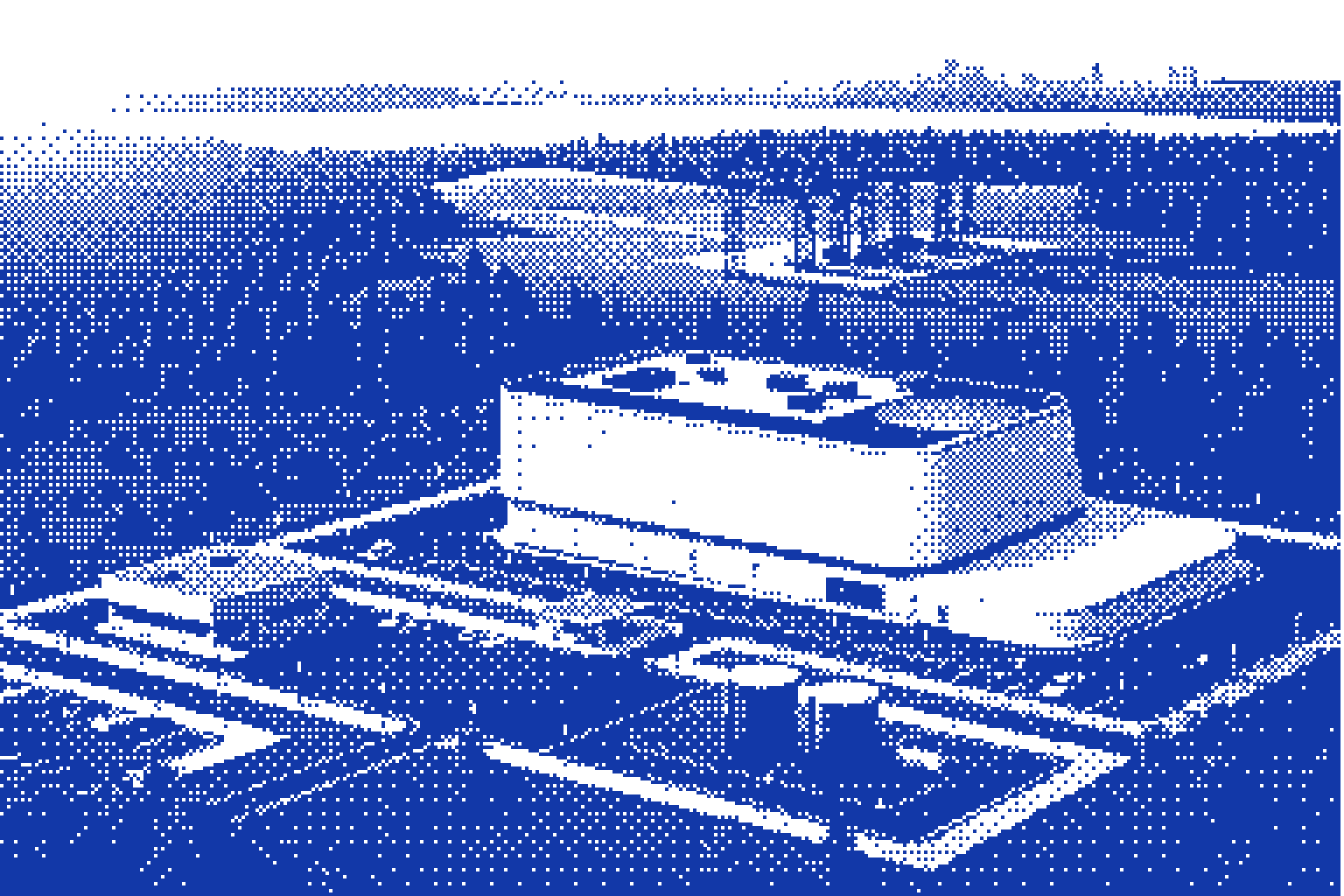
The NRC approved a construction permit Sept. 29 for the Tennessee Valley Authority's BWRX-300 reactor at Oak Ridge, Tennessee. The GE Vernova Hitachi design produces 300 megawatts, fits on a two-soccer-field footprint, and uses passive cooling that requires no external power to stay safe. The permit targets a completion window between October 2031 and September 2032. TVA has not set a start date or confirmed its funding structure.
The UK side of this story is the signal to watch. Fourteen BWRX-300 units backed by up to £35 billion in private capital, with Google Cloud already named as a partner, are planned for co-location with data centers. That is not a utility play. That is a template for tech companies to procure power at the source. For founders and infrastructure teams modeling capacity five to ten years out, dedicated nuclear at the campus level is moving from theoretical to permitted.
ARTIFICIAL INTELLIGENCE
Reflection AI's Beam Targets Enterprise AI With Open-Source Efficiency Play

Reflection AI released Beam, a 501-billion-parameter open-source model, on Tuesday. It activates only 23 billion parameters per token, which the company says lets it match or beat GLM-5.2, a model with roughly 250 billion more parameters, at one-third to one-fourth the hardware cost. Beam scores 80.9 on SWE-Bench Verified and 97.8 on AIME 2026. Moonshot AI's Kimi K3 still leads on Terminal-Bench v2.1, 88.3 to Beam's 80.1, and no independent benchmarks have published yet.
Reflection's $4.66 billion in funding and a $6.3 billion compute deal with SpaceX give it resources most open-source labs cannot match. The business model underneath Beam is selling full-stack AI systems to governments and large enterprises that want to run models on their own infrastructure. For software companies evaluating open models, the efficiency argument matters more than raw benchmark rank. If the hardware cost claims hold under independent testing, Beam becomes a serious option for teams that want to self-host a capable coding or reasoning model without building out a massive GPU fleet.
FUNDING & M&A
Schneider Pays $23.7B for PTC as AI Fears Compress Software Valuations

Schneider Electric agreed Oct. 5 to buy PTC for $23.7 billion in cash, a 42.3% premium to PTC's last closing price. PTC's stock had fallen roughly 17% in the months before the deal as investors priced in AI disruption risk to industrial software. That pressure is what allowed Schneider to buy near a decade-low valuation at 13.23 times EBITDA. PTC shares jumped 34% on the news. Schneider shares dropped nearly 10%, erasing about 15 billion euros in market cap.
The Jefferies note cuts to what matters here: the same AI fears that made PTC affordable will now ride along inside Schneider after the deal closes. Schneider is betting it can cross-sell PTC's product lifecycle and engineering software through its industrial distribution network and accelerate what it calls Industrial AI. That is a long integration road, with closing not expected until Q3 2027 and regulatory scrutiny likely around PTC's U.S. defense business. For software founders watching M&A multiples, this deal confirms that AI uncertainty is compressing valuations across industrial software, and acquirers with physical-world distribution are moving to capture that gap.
Created by the robots at The SaaS Sentinel