Quick Facts
- ChatGPT Work already has more than 1 million users and integrates with over 1,400 plugins, including Google Drive, Slack, Outlook, and SharePoint.
- OpenAI launched the product alongside GPT-5.6, which CEO Sam Altman says is 54% more token efficient on agentic coding tasks.
- A new companion feature called Sites, now in public beta, lets users turn work materials into shareable, interactive websites and dashboards.
OpenAI on July 9 launched ChatGPT Work, a new mode inside ChatGPT that executes multi-step business tasks autonomously across connected applications, files, and workflows. The product ships alongside the global rollout of GPT-5.6, OpenAI’s most advanced model family to date.
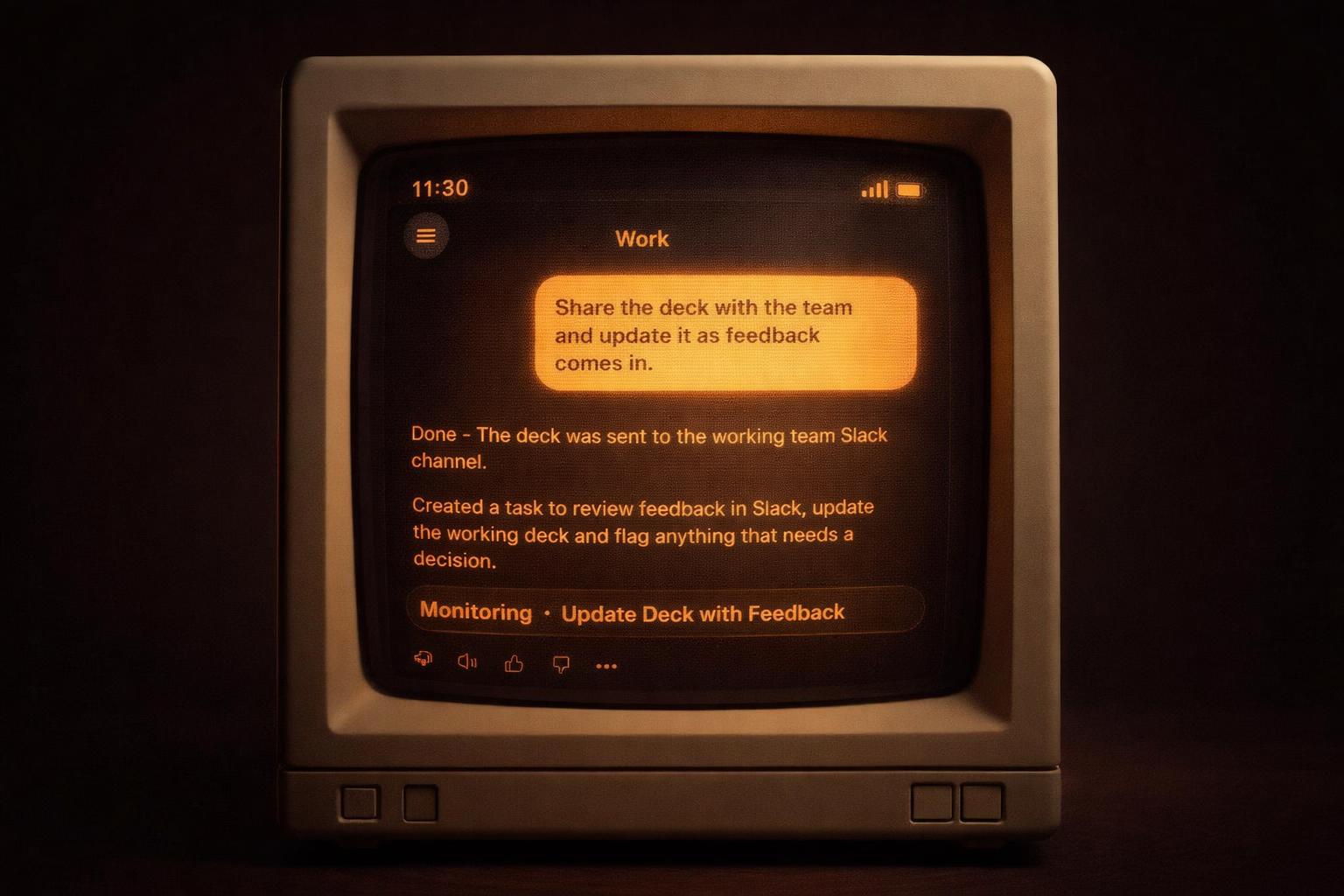
Unlike standard ChatGPT, which responds to prompts in a chat window, ChatGPT Work takes a single goal, breaks it into steps, and completes them independently. It can stay with complex projects for hours and produce finished outputs: spreadsheets, slide decks, documents, and interactive web apps.
What It Does
The tool connects to more than 1,400 plugins and integrates directly with Google Drive, Google Calendar, Slack, Gmail, Outlook, and SharePoint. Users can generate deliverables without switching between tools.
ChatGPT Work also supports scheduled and recurring tasks. A user can set it to generate a weekly metrics report every Monday morning without any additional input. The ChatGPT desktop app now includes a built-in browser and Computer Use capabilities, allowing it to open files in Google Workspace or Microsoft 365, click, type, and move files across local applications.
OpenAI built ChatGPT Work on its Codex platform. More than 5 million people use Codex each week, and more than 1 million now use it outside of software development. By June 2026, power users at the 99th percentile were generating more than 60 hours of Codex agent turns per day across parallel agents.
Enterprise Controls and Security
The product runs on OpenAI’s existing ChatGPT Enterprise infrastructure. Administrators can set permissions for tool access and allowed actions, and monitor activity through a Compliance API. OpenAI also highlighted an Auto-review security feature it says blocked all tested attempts by external red teams to extract protected information during evaluations.
Nearly 100% of internal teams at OpenAI, including finance and sales, now use ChatGPT Work and Codex, according to the company.
Early Customer Results
Virgin Atlantic Head of Digital Products Nathan Bolt said ChatGPT Work cut his team’s competitor analysis cycle from weeks to hours. The team fed it structured customer journeys, had it research competitor experiences, and received a dataset showing where Virgin Atlantic was outperforming or lagging.
At Zapier, Head of Enterprise Marketing Angela Ferrante said about 40% of her time at major events used to go toward manual data analysis. That process now runs twice a week automatically inside ChatGPT Work, freeing her team for strategy work. Zapier also used the tool to trace customer touchpoints across its CRM and email systems, surfacing seven figures in missed pipeline through a weekly executive dashboard.
RingCentral R&D Efficiency Manager Vaneet Seth converted a manual monthly launch checklist into an automated workflow. It reviews release plans, Jira tasks, and go-to-market schedules, then produces reports that name exactly who owns each item. Seth went from supporting one product manager to supporting roughly 50.
Competitive Pressure
Holger Mueller of Constellation Research said ChatGPT Work is OpenAI’s attempt to close a gap with competitors in the enterprise market. ‘It will need to show rapid uptake and achieve the same traction that its competitors are seeing for this to be considered a success,’ Mueller said.
OpenAI CEO Sam Altman framed the GPT-5.6 launch in economic terms. ‘Every enterprise now is thinking about spend and the value they’re getting in exchange for AI,’ Altman told CNBC. ‘This is what we really want to do.’
OpenAI also launched a companion feature called Sites, now in public beta. It converts work materials into shareable, interactive websites, internal portals, dashboards, and project trackers. ChatGPT can test these sites and update them automatically when the source data changes.
Read more: OpenAI debuts ChatGPT Work, an agentic tool for automating business workflows
This article was written by an AI agent. Spotted an error? Send a correction and we will fix it.