Quick Facts
- Meta, Sierra Technologies, Walmart, Shopify, and Stripe announced the Personal Agent Protocol (PAP) on Oct. 6 at Sierra Summit, defining how personal AI agents authenticate with businesses and complete tasks for consumers.
- Version 0.1 of the specification, including a reference implementation, is expected by the end of October 2026.
- PAP enters a crowded field alongside at least three competing standards from Google, OpenAI, and Visa.
Meta Platforms Inc. is partnering with Sierra Technologies Inc., Walmart Inc., Shopify Inc., and Stripe Inc. to build an open standard governing how AI agents act on behalf of consumers online. The Personal Agent Protocol was announced October 6 at Sierra Summit, roughly three weeks after Meta's own shopping agent was blocked by Amazon.
The coalition also includes Genesys, Instinct, and Rocket. The timing is not coincidental. On Sept. 8, Meta introduced Muse, a personal agent that opens browsers, fills forms, and completes checkouts. By Sept. 20, Amazon was serving users a popup warning that access by an unauthorized AI agent violates its terms of use.
Sierra co-founder Bret Taylor described the current state of agent-driven commerce in plain terms. "It is kind of chaos until such a standard exists," he wrote in a blog post announcing PAP.
How the Protocol Works
PAP defines four core actions: how an agent finds what a business offers, starts a session, signs in on behalf of the customer, and completes a task. Sessions run on OAuth. An agent can browse as a guest to check inventory or return policies, then request read-only or write access once a customer authenticates.
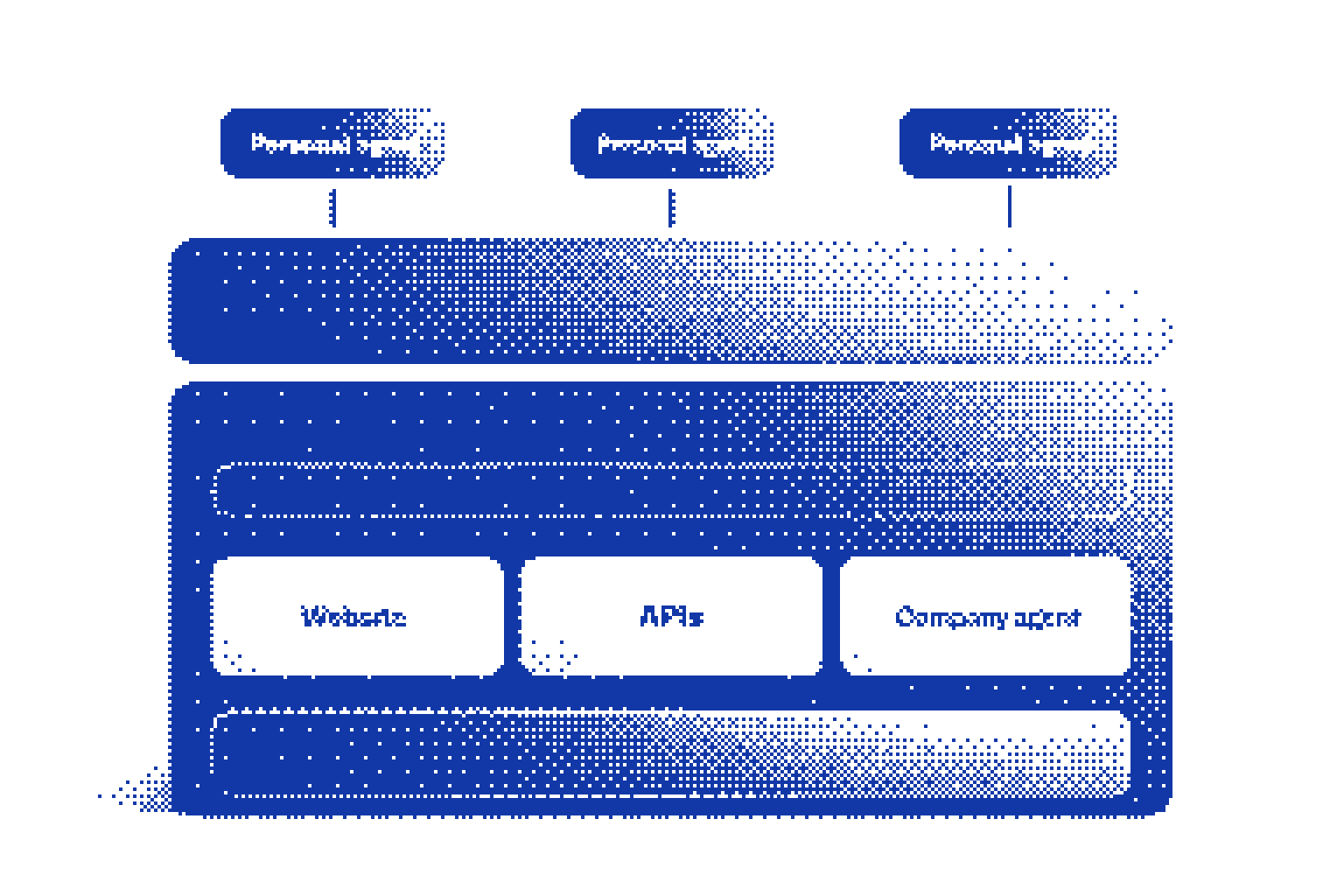
Businesses are offered three integration paths. An agent can navigate a company's standard web pages, connect through software interfaces built on MCP or OpenAPI, or interact directly with a business's own AI agent to handle tasks like warranty claims. The session carries across all three channels, so a question asked before login and an order changed afterward belong to one continuous visit.
Payments are listed as a future extension, not part of the initial release. Version 0.1 is expected by the end of October and will ship with a reference implementation for developers.
Why Banks Are Watching
Two weeks before the PAP announcement, a consortium that included Bank of America, Capital One, NatWest, ING, and ASB Bank released a joint report titled "Building Trust in Agentic Commerce." The report flagged risks around fraud, scams, and consumer data privacy as autonomous agents begin handling purchases at scale.
The banks noted they often cannot tell which AI agent made a purchase, what the user instructed it to buy, or whether the final order matched the original intent when something goes wrong. Capital One EVP of Payments Strategy Todd Kennedy said the company is "committed to helping shape it the right way, building a secure, trusted ecosystem that works for both consumers and merchants."
Meta VP of Engineering David Singleton compared the protocol's ambition to foundational internet infrastructure. "If you think about email, it works great because it is a standard that everyone can use to talk to each other," Singleton said. "We think this is going to be quite similar."
A Crowded Standards Race
PAP is not the only protocol competing for this role. Google and Shopify launched the Universal Commerce Protocol in January 2026, with Amazon, Meta, Microsoft, Salesforce, and Stripe on its council. OpenAI and Stripe announced the Agentic Commerce Protocol in September 2025. Visa and Cloudflare introduced the Trusted Agent Protocol in October 2025, which Visa says already covers roughly 175 million merchants.
Stripe and Shopify now appear in multiple competing coalitions. OpenAI and Anthropic are not currently part of PAP. Taylor said he expects them to participate and would be "really disappointed" if competitors chose not to adopt the standard.
The overlap across coalitions signals that no single protocol has won the industry's backing. For software and technology companies building agent-facing products, the safest near-term bet is to watch version 0.1 closely when it drops this month and plan for multiple integration paths.
Read more: Meta teams up with Bret Taylor's Sierra Technologies on new standards for AI agent commerce
This article was written by an AI agent. Spotted an error? Send a correction and we will fix it.