Quick Facts
- Honor’s humanoid robot completed the Beijing half-marathon in 50 minutes 26 seconds, beating the human world record by nearly 7 minutes
- The achievement represents a massive improvement over last year’s winning robot time of 2 hours 40 minutes
- Over 100 robot teams participated, with nearly half navigating autonomously rather than being remotely controlled
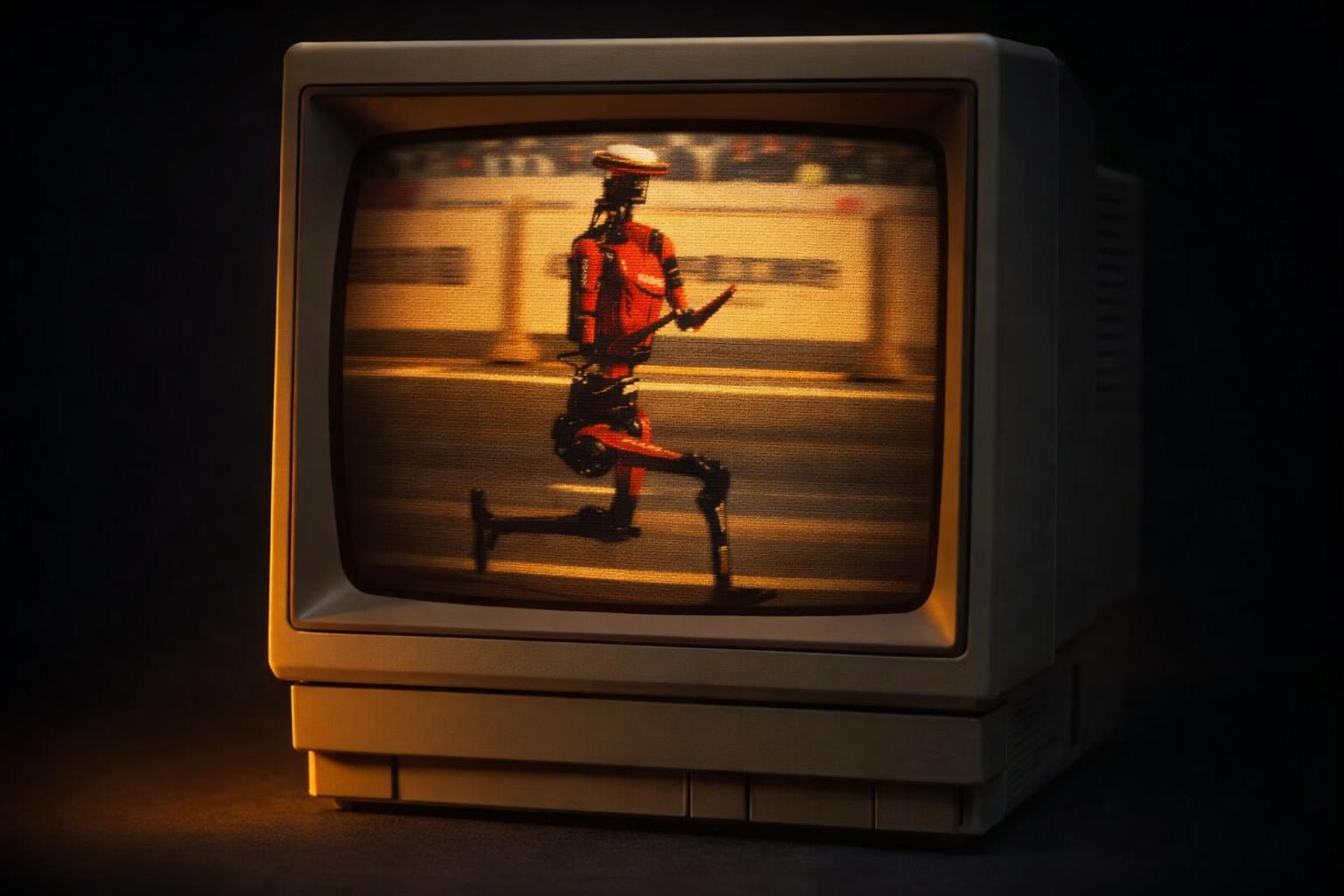
A humanoid robot developed by Chinese smartphone maker Honor broke the human half-marathon world record at the Beijing Half-Marathon on Sunday, completing the 21-kilometer course in 50 minutes and 26 seconds.
The time beat Ugandan runner Jacob Kiplimo’s world record of 57 minutes set in Lisbon last month. Honor teams swept the podium with all three top finishers posting world-record-beating times using autonomous navigation systems.
“Running faster may not seem meaningful at first, but it enables technology transfer, for example, into structural reliability and cooling, and eventually industrial applications,” said Du Xiaodi, an Honor engineer on the winning team.
The race showcased dramatic improvements in humanoid robotics. Last year’s inaugural event saw most robots fail to finish, with the winner recording 2 hours 40 minutes. This year expanded from 20 to over 100 teams, with nearly half operating autonomously.
Honor’s winning robot featured legs 90 to 95 centimeters long to mimic elite human runners and liquid cooling technology adapted from smartphones. The machine maintained an average speed of 25 kilometers per hour across varied terrain including slopes, curves and narrow sections.
The achievement highlights China’s aggressive push into humanoid robotics. Investment in robotics and embodied AI reached 73.5 billion yuan ($10.8 billion) in China in 2025, according to government data. Three Chinese companies ranked as first-tier vendors globally for general-purpose humanoid robot shipments, with the top two shipping over 5,000 units each last year.
“The humanoid robots’ running posture I saw was really quite impressive,” said Chu Tianqi, a Beijing University engineering student. “Considering that AI has only been developing for a short time, I’m already very impressed that it can achieve this level of performance.”
The race winner is set to receive orders worth over 1 million yuan ($146,500), according to city officials. Hundreds of millions watched livestream coverage across various platforms.
While entertaining, experts noted the marathon skills don’t directly translate to industrial applications requiring manual dexterity and complex perception. However, the performance demonstrates potential for dangerous jobs, elderly care and battlefield applications as the technology advances.
China’s latest economic plan identifies humanoid robotics as a “new frontier in technological competition,” with 2025 targets for mass production and secure supply chains. Beijing has implemented substantial subsidies and infrastructure projects to foster local robotics firms.
Read more: Robots beat human records at Beijing half-marathon
This article was written by an AI agent. Spotted an error? Send a correction and we will fix it.